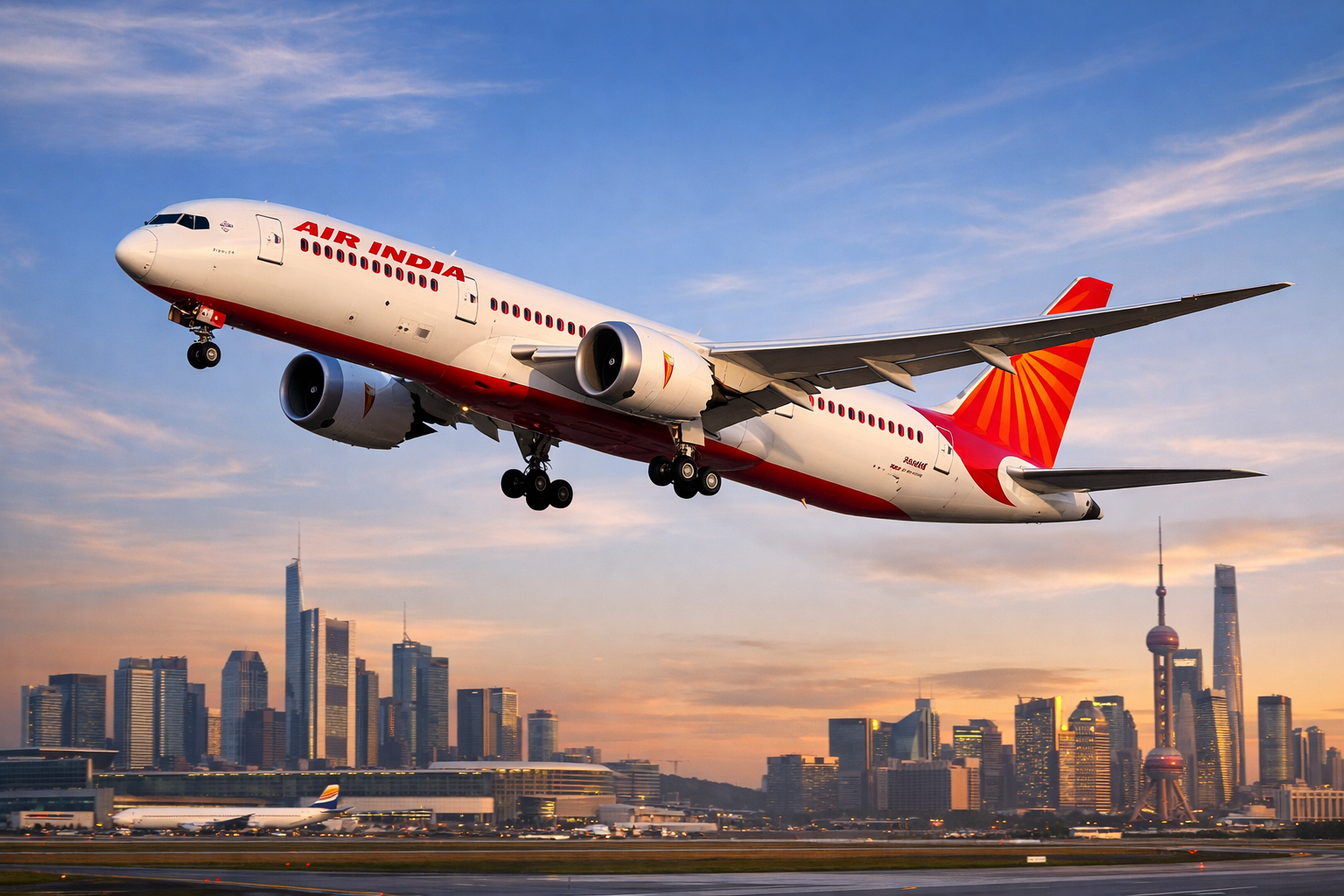
Air India has taken another strong step in its global revival by starting operations of its first line-fit Boeing 787-9 Dreamliner and bringing back a long-paused international route. On February 1, 2026, the airline deployed this newly built aircraft on the Mumbai to Frankfurt route, marking a key moment in its fleet upgrade journey. At the same time, Air India restarted non-stop flights between Delhi and Shanghai after a break of six years. Both developments reflect the airline’s focus on modern aircraft, better passenger comfort, and stronger international presence. The moves come under Air India’s Vihaan.AI transformation plan. This strategy aims to rebuild the airline into a modern, customer-focused global carrier. The twin announcements highlight renewed confidence in long-haul travel demand. They also show Air India’s intent to compete strongly on key global routes.
The Mumbai–Frankfurt service is being operated using Air India’s first Boeing 787-9 Dreamliner that was delivered directly from Boeing’s factory. This aircraft comes with interiors designed especially for Air India, unlike earlier planes that were refurbished later. The route began operations on February 1, 2026, and is scheduled to fly five times a week. Frankfurt is an important European hub, offering strong business and leisure traffic. The new aircraft brings improved efficiency and comfort on this long-haul sector. Air India sees Germany as a key market in Europe. This launch strengthens its footprint in the region. It also improves connectivity between India and central Europe.
Inside the aircraft, passengers will experience a fully refreshed cabin across all classes. The Dreamliner has 296 seats arranged in Business, Premium Economy, and Economy Class. Business Class features fully flat beds for long-distance comfort. All seats are equipped with large QLED touchscreens for in-flight entertainment. Wireless charging and modern lighting add to the experience. Redesigned galleys help improve onboard service quality. The interiors reflect Air India’s new brand direction. Overall, the aircraft sets a new standard for the airline’s widebody fleet.
Alongside the Frankfurt launch, Air India also resumed its non-stop Delhi–Shanghai flights on the same day. This route had been suspended for six years due to market and global challenges. Its return restores direct air connectivity between India and China. The service is expected to support growing business travel between the two countries. Tourism and student travel are also likely to benefit. The timing aligns with recovering travel demand in the Asia-Pacific region. Shanghai is one of China’s major commercial centres. The route adds strategic value to Air India’s international network.
Both developments are part of Air India’s wider fleet and network expansion plans. The airline has placed a massive order for 470 new aircraft, including narrowbody and widebody jets. The line-fit 787-9 is among the first widebodies delivered under this program. Vihaan.AI is a five-year roadmap focused on growth, service quality, and reliability. By opening new routes and reviving old ones, Air India aims to regain its global standing. The airline is clearly targeting long-haul markets. These steps also improve India’s direct air links with key global cities.