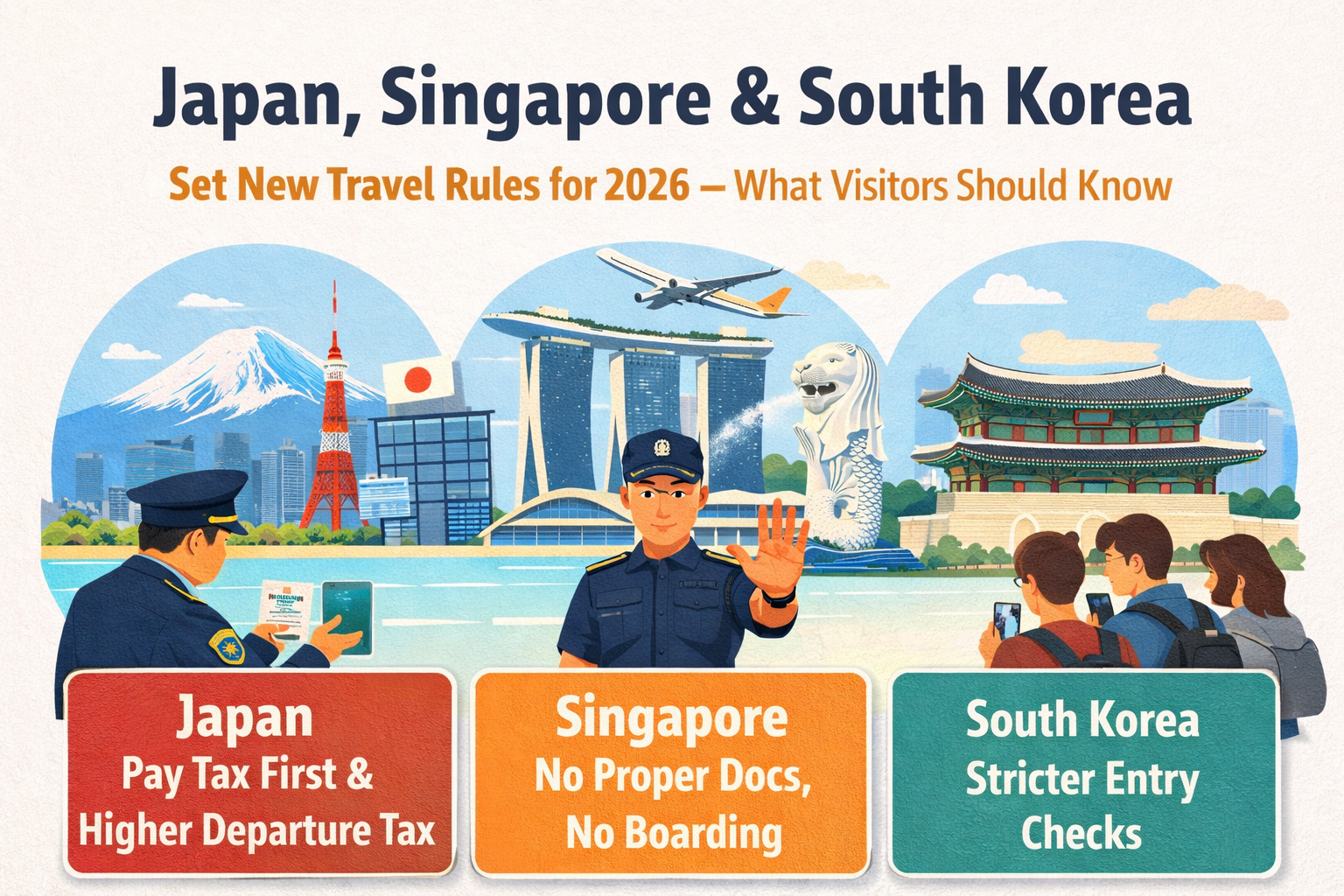
From 2026, Japan will bring important changes for foreign travelers. One major update is in tax-free shopping. From November 2026, visitors will first pay tax while shopping and then claim a refund at the airport before leaving the country. This is to stop misuse of the tax-free system. Japan has also increased its departure tax from ¥1,000 to ¥3,000. The extra money will be used for better crowd management, clearer signs in many languages, and improved tourism facilities in less-visited areas.
Japan is also strengthening its border checks. Travelers can expect closer document checks, better tracking systems, and more review of travel data at entry and exit points. These steps are meant to improve safety and ensure that visitors follow the rules properly. Tourists may need to keep their papers ready and allow more time at airports.
Singapore is taking a strong step with a new No-Boarding Directive starting from 30 January 2026. Under this rule, immigration authorities can tell airlines not to allow passengers to board if they do not have the correct visa, valid passport, or travel permission. This means travelers who are not eligible may be stopped even before the flight begins. The main aim is to protect border security and stop travel misuse early.
South Korea is also tightening its travel rules, even though full details are still limited. The country is increasing checks on documents, improving visitor monitoring systems, and working on policies to handle heavy tourist crowds. Like Japan and Singapore, South Korea wants to reduce pressure on its cities and tourism facilities while keeping travel safe and organized.